Article / Archive
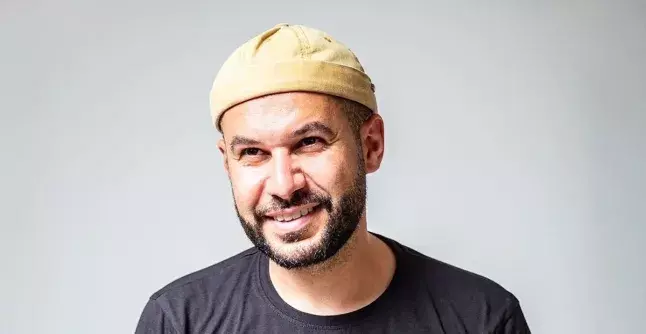
It’s not just hummus; it’s history, belonging, and pride (Picture: Marcellus de Lemos/N18 ART STUDIO)
Walking down the supermarket aisle, I stopped in my tracks.
An entire shelf stacked with all kinds of wild, colourful hummus. Green hummus with avocado. Brown hummus with chocolate. Red hummus with harissa. Marmite hummus. Truffle hummus.
It was endless – and deeply unsettling. I genuinely felt shaken and that emotion caught me off guard.
I picked up the phone and called my mother in Jordan, who proudly claims to make the best hummus. As soon as I heard her voice, I started sobbing.
She heard me sniffling and, in true tough-love fashion, said, ‘Ah, you must’ve caught a cold from that British weather?’
‘Yes, Mama,’ I mumbled. ‘Just a cold.’ I couldn’t bring myself to verbalise my shock and disgust because I didn’t yet have the words to describe it.
I do now, though. My mind couldn’t wrap itself around the idea that my culture – hummus – was being culturally appropriated.
It makes me sick.
I grew up in Jordan but my family is actually from Palestine. Before I was born, they were forced to flee in 1948 and we became refugees.
Despite this, I had a happy childhood with my parents and older sister. Throughout it all, hummus was a staple.
In fact, we’d have it as a family every Friday as part of a breakfast ritual. Mum would make it from scratch and we’d sit around the table sharing it.
When I turned 18 and started driving, I’d bring home plates of it from different places we called ‘hummuseries’. With loud music and windows down, it felt comforting to have a warm hummus plate on the passenger seat.
My mother would critique them all, comparing it to hers. And I was inclined to agree – hers was the best of all.
It wasn’t until I moved to the UK in 2013 to pursue a Master’s Degree in Renewable Energy that I began to see hummus through a different lens.
In supermarkets, I was stunned: all different types of hummus ‘fusions’ – many without chickpeas at all.
The thing is, the word hummus literally means chickpea in Arabic. If there’s no chickpea, it’s not hummus. It’s just a dip.
Sure, culinary innovation is great. But sometimes what looks like fusion is actually confusion — or worse, erasure. This is something I learnt almost by accident.
During Halloween in 2014 — a celebration I’ve never really been a fan of — a friend of mine told me she’d been called out for wearing a Native American costume. Apparently, it was considered cultural appropriation.
I was genuinely confused. ‘Wait,’ I said, ‘isn’t cultural appropriation a good thing? Like, you’re celebrating and appreciating another culture?’
She shook her head and explained: ‘Not exactly. Cultural appropriation is when members of one culture — usually a dominant one — adopt elements of another culture, often without permission or any understanding of its significance or history. There’s usually a power imbalance and it often leads to misrepresentation.’
And that’s when it all hit me. The reason I felt so shocked in that supermarket aisle was because I was lamenting what had become of my culture. My hummus.
To me, hummus isn’t just a recipe; it’s an identity rooted in the Levant, long before modern political borders were drawn.
Once I realised how far hummus had been taken from its roots, I turned to a Lebanese-Palestinian friend of mine and asked for his mother’s recipe because I heard from him how legendary it was (I had never needed to make hummus before this because I could have easily got it from local sources in Jordan).
My friend obliged. So I made it and eventually perfected it.
Now I try to share my authentic hummus with anyone and everyone I meet – and they love it.
In Brighton, where I live, café baristas, flower shop owners, food critics, and even fellow amateur theatre actors have all tried it. They all listen to me when I tell them about the history of hummus, what it means to me, and what it means to my family.
I have even made huge pots of it and brought it to pro-Palestine marches with me. Whenever I offer my hummus to people, they often ask me: ‘What’s your secret?’
‘Palestinian love,’ I reply with a smile.
Soon enough, people started calling me the ‘Hummus Guy’. So I’ve embraced it – and my mission to spread authentic hummus across the world.
Hummus shows up at every Levantine breakfast table. It tells stories across generations.
When it’s commercialised without context or origin, something sacred is lost. It feels that hummus is colonised, butchered, brutalised – even the pronunciation of the word itself feels foreign.
These ‘hummus fusions’ aren’t inherently evil — they’re just mislabelled and misguiding. If it’s a beetroot dip, call it a beetroot dip.
When heritage is repackaged and resold – especially while communities tied to it are struggling – it becomes an insult. It’s not just hummus; it’s history, belonging, and pride.
If I can protect this one small piece of culture, I will.
At the end of the day, I would like supermarkets to be true to actual ingredients and local recipes of hummus. Stop the cultural appropriation.
I can make sure people know where it comes from. And that matters. It matters to me.
So yes, I’m on a mission. I’m here to free the hummus.
It’s not just hummus; it’s history, belonging, and pride (Picture: Marcellus de Lemos/N18 ART STUDIO)
Walking down the supermarket aisle, I stopped in my tracks.
An entire shelf stacked with all kinds of wild, colourful hummus. Green hummus with avocado. Brown hummus with chocolate. Red hummus with harissa. Marmite hummus. Truffle hummus.
It was endless – and deeply unsettling. I genuinely felt shaken and that emotion caught me off guard.
I picked up the phone and called my mother in Jordan, who proudly claims to make the best hummus. As soon as I heard her voice, I started sobbing.
She heard me sniffling and, in true tough-love fashion, said, ‘Ah, you must’ve caught a cold from that British weather?’
‘Yes, Mama,’ I mumbled. ‘Just a cold.’ I couldn’t bring myself to verbalise my shock and disgust because I didn’t yet have the words to describe it.
I do now, though. My mind couldn’t wrap itself around the idea that my culture – hummus – was being culturally appropriated.
It makes me sick.
I grew up in Jordan but my family is actually from Palestine. Before I was born, they were forced to flee in 1948 and we became refugees.
Despite this, I had a happy childhood with my parents and older sister. Throughout it all, hummus was a staple.
In fact, we’d have it as a family every Friday as part of a breakfast ritual. Mum would make it from scratch and we’d sit around the table sharing it.
When I turned 18 and started driving, I’d bring home plates of it from different places we called ‘hummuseries’. With loud music and windows down, it felt comforting to have a warm hummus plate on the passenger seat.
My mother would critique them all, comparing it to hers. And I was inclined to agree – hers was the best of all.
It wasn’t until I moved to the UK in 2013 to pursue a Master’s Degree in Renewable Energy that I began to see hummus through a different lens.
In supermarkets, I was stunned: all different types of hummus ‘fusions’ – many without chickpeas at all.
The thing is, the word hummus literally means chickpea in Arabic. If there’s no chickpea, it’s not hummus. It’s just a dip.
Sure, culinary innovation is great. But sometimes what looks like fusion is actually confusion — or worse, erasure. This is something I learnt almost by accident.
During Halloween in 2014 — a celebration I’ve never really been a fan of — a friend of mine told me she’d been called out for wearing a Native American costume. Apparently, it was considered cultural appropriation.
I was genuinely confused. ‘Wait,’ I said, ‘isn’t cultural appropriation a good thing? Like, you’re celebrating and appreciating another culture?’
She shook her head and explained: ‘Not exactly. Cultural appropriation is when members of one culture — usually a dominant one — adopt elements of another culture, often without permission or any understanding of its significance or history. There’s usually a power imbalance and it often leads to misrepresentation.’
And that’s when it all hit me. The reason I felt so shocked in that supermarket aisle was because I was lamenting what had become of my culture. My hummus.
To me, hummus isn’t just a recipe; it’s an identity rooted in the Levant, long before modern political borders were drawn.
Once I realised how far hummus had been taken from its roots, I turned to a Lebanese-Palestinian friend of mine and asked for his mother’s recipe because I heard from him how legendary it was (I had never needed to make hummus before this because I could have easily got it from local sources in Jordan).
My friend obliged. So I made it and eventually perfected it.
Now I try to share my authentic hummus with anyone and everyone I meet – and they love it.
In Brighton, where I live, café baristas, flower shop owners, food critics, and even fellow amateur theatre actors have all tried it. They all listen to me when I tell them about the history of hummus, what it means to me, and what it means to my family.
I have even made huge pots of it and brought it to pro-Palestine marches with me. Whenever I offer my hummus to people, they often ask me: ‘What’s your secret?’
‘Palestinian love,’ I reply with a smile.
Soon enough, people started calling me the ‘Hummus Guy’. So I’ve embraced it – and my mission to spread authentic hummus across the world.
Hummus shows up at every Levantine breakfast table. It tells stories across generations.
When it’s commercialised without context or origin, something sacred is lost. It feels that hummus is colonised, butchered, brutalised – even the pronunciation of the word itself feels foreign.
These ‘hummus fusions’ aren’t inherently evil — they’re just mislabelled and misguiding. If it’s a beetroot dip, call it a beetroot dip.
When heritage is repackaged and resold – especially while communities tied to it are struggling – it becomes an insult. It’s not just hummus; it’s history, belonging, and pride.
If I can protect this one small piece of culture, I will.
At the end of the day, I would like supermarkets to be true to actual ingredients and local recipes of hummus. Stop the cultural appropriation.
I can make sure people know where it comes from. And that matters. It matters to me.
So yes, I’m on a mission. I’m here to free the hummus.


