1.45 million California students are chronically absent. Can recess and cash get them back?
Los Angeles Times (archive.ph)
By Jocelyn Gecker, Veronica Roseborough, and Howard Blume
2024-08-15 14:44:15GMT
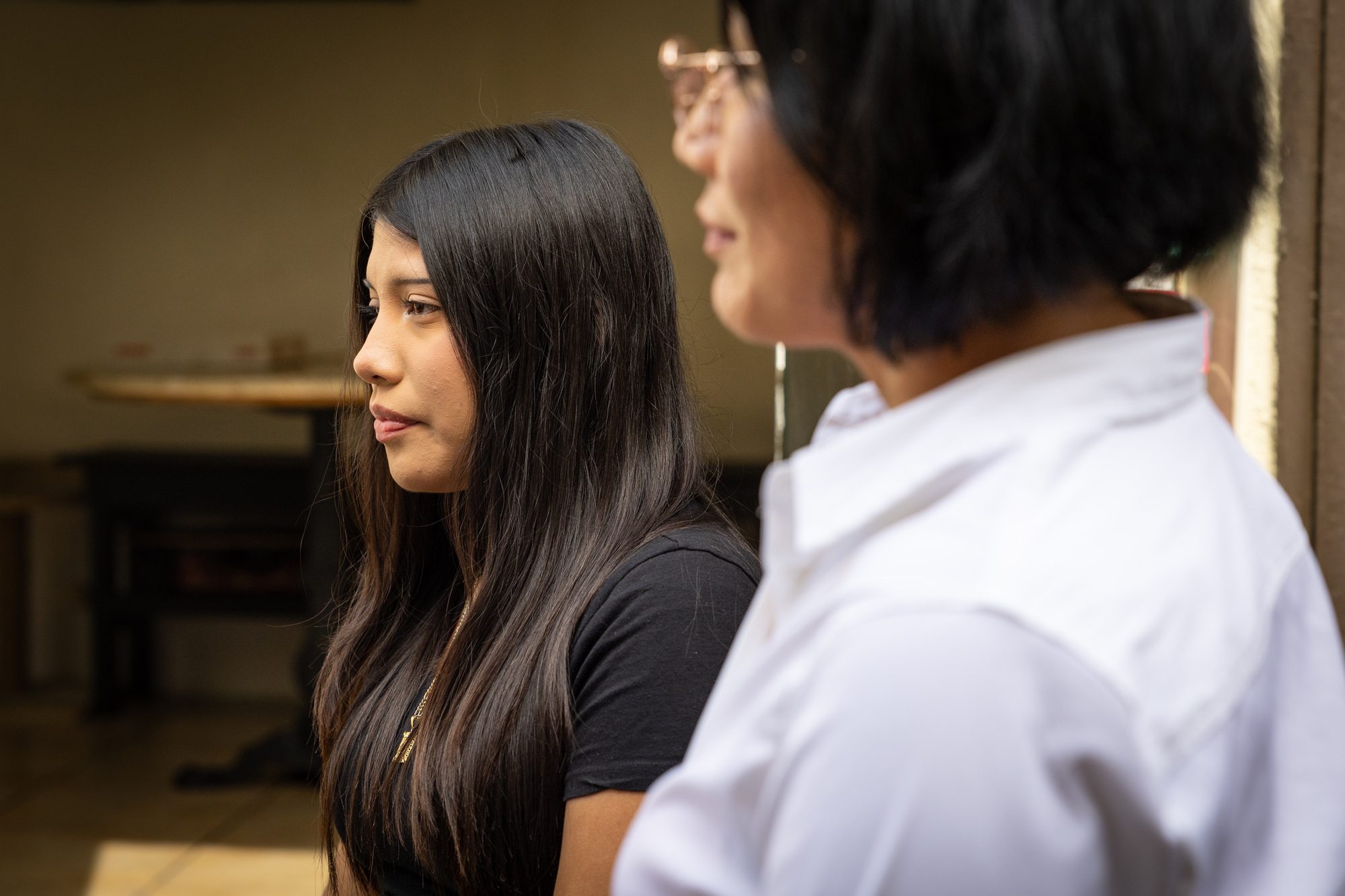
Yaretzi Perez, 14, has missed a lot of school, and her mother, Eleuteria, has to leave for work early. The solution for Yaretzi may be setting aside a seat for her on a school bus route. (Jason Armond / Los Angeles Times)
Ninth-grader Yaretzi Perez wants to be a neonatal nurse. But first, she has to find a way to stop missing so many days of school.
Her mother, Eleuteria Perez, is a single parent of five — ages 17, 14, 13, 10 and 8. They attend four schools, all starting at the same time. She’ll sometimes arrange a pick-up; sometimes pay someone to help. But the two older girls were supposed to walk to their middle and high schools from their Arlington Heights apartment.
Years after COVID-19 upended American schooling, nearly every state is still struggling with attendance, according to data collected by the Associated Press and Stanford University economist Thomas Dee, whose research tabulated about 12 million chronically absent students in 42 states and Washington, D.C., for the 2022-23 school year, the most recent for which there is comprehensive data.
In California about 1 in 4 students, or more than 1.45 million, were chronically absent in 2022-23, meaning they missed at least 10% of the school year — a rate comparable to the national average.
The figures for the Los Angeles Unified School District are worse, with about 1 in 3 students chronically absent. It’s common for school systems serving higher numbers of low-income families to also have worse attendance, both before the pandemic and today. In L.A. Unified, 81% of students qualify for a free or reduced-price lunch, the common marker for poverty in education.
The chronic absenteeism rate, while remaining high, represents an improvement over the prior year’s rate of 28.2%. Some states, including California, improved significantly; four got worse. Before the pandemic, 15% of students missed at least 10% of school, considered too high at the time.
Although society may have largely moved on from COVID, educators say they are still grappling with the effects of pandemic school closures. After months to a year or more at home, school for many students has felt overwhelming, boring or socially stressful. More than ever, children and parents have been deciding it’s OK to stay home, which makes catching up even harder.
Schools are working to identify students with slipping attendance, then providing help and hoping to close communication gaps with parents, who often aren’t aware their child is missing so much school or why it’s problematic.
To make more progress, experts say, schools must get creative.
The best solution for Yaretzi, school district staff decided, would be to connect the family with an L.A. Unified bus route the girl could take to get to school.
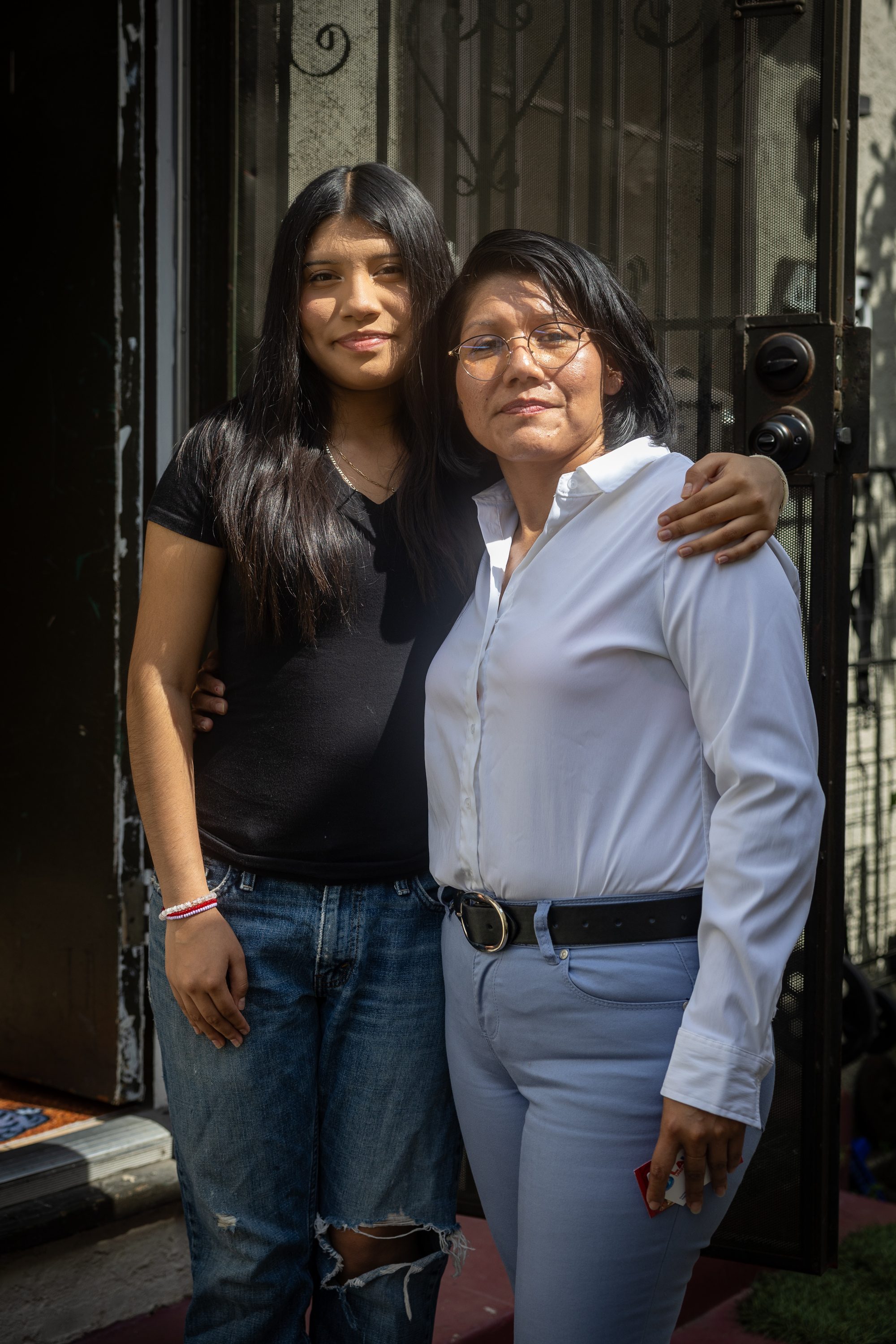
Yaretzi Perez, 14, with mother Eleuteria Perez. (Jason Armond / Los Angeles Times)
This decision was made as part of an L.A. Unified outreach program called iAttend, in which district staff reach out to families or even visit them to find out why children are missing school and then tailor solutions.
“You have to meet students and families where they are, and for us, it’s going to their homes,” said Supt. Alberto Carvalho, who periodically makes home visits with a phalanx of news media. In this case, the publicity — it was hoped — also would make an impression on other families.
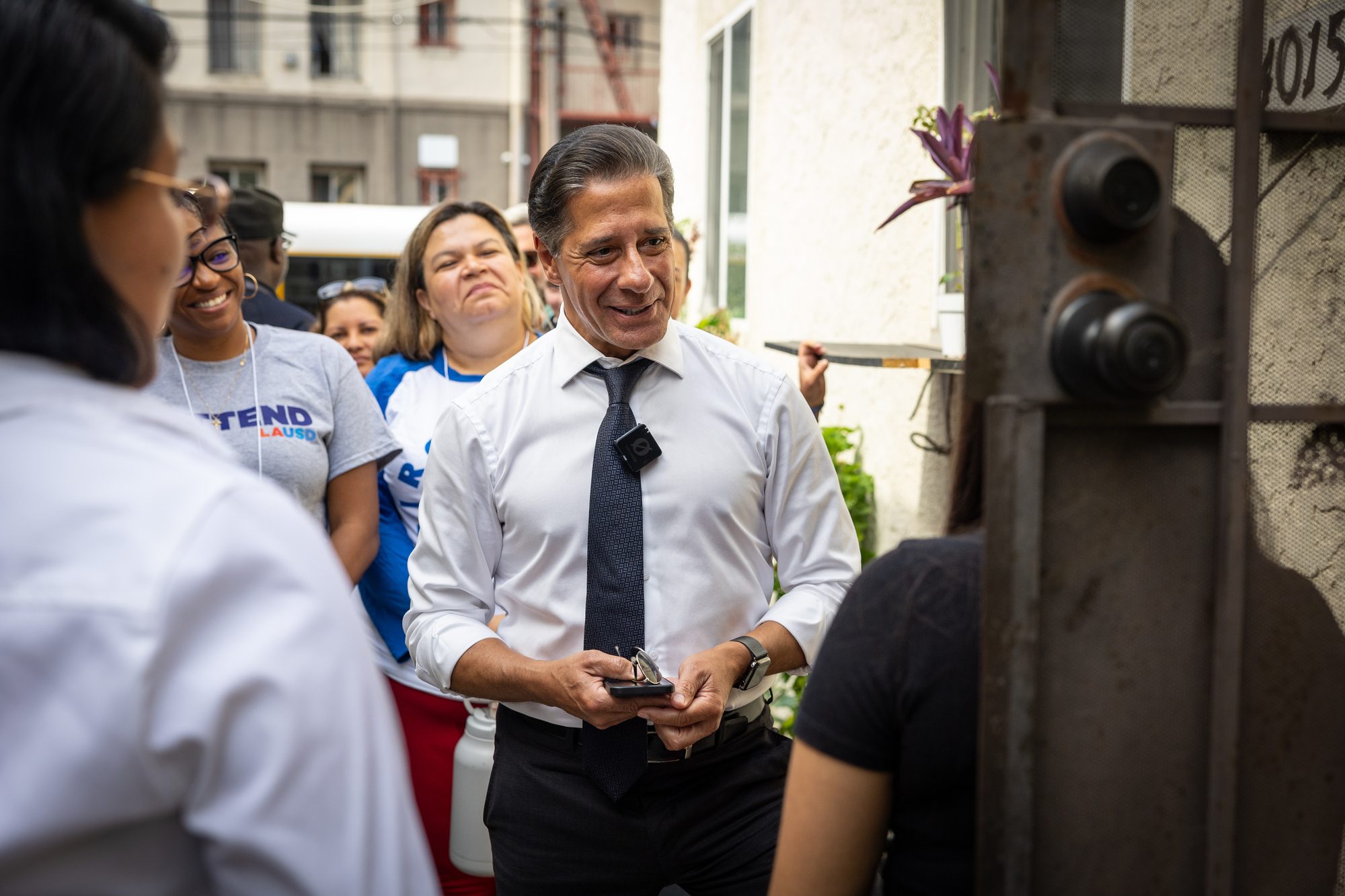
L.A. Unified Supt. Alberto Carvalho along with senior school district officials and teachers visit Yaretzi Perez, 14, and mother Eleuteria, left, to support the family and curb her poor school attendance. (Jason Armond / Los Angeles Times)
After talking with daughter and mother, Carvalho turned things over to the students’ soon-to-be teachers at L.A. High in Mid-Wilshire, which is about a mile from the family’s home. The teachers offered a backpack of school supplies and also reassuring smiles.
Yaretzi, shy and overwhelmed for a while, eventually mentioned her interest in AVID, a college-prep and support program for students with challenges to overcome. She had been involved in AVID at Cochran Middle School.
AVID and algebra I teacher Sandra Ruiz encouraged this interest and described an important benefit, that Yaretzi would be with the same classmates all four years.
“All of the AVID classes, freshman, sophomore, junior, senior, are fourth period,” Ruiz said. “So make friends and then you can be on the bus with them.”
In L.A. Unified, just over 45% of students were chronically absent in 2021-22. The percentage dropped to 36.5% the following year, in 2022-23, the comparision year for the national research. The preliminary rate for the 2023-24 school shows improvement: to 32.3%.
Caring adults — and incentives
Across district and charter schools in Oakland, chronic absenteeism skyrocketed from 29% pre-pandemic to 53% in 2022-23. The district asked students what would convince them to come to class. Money, the students replied, and a mentor.
A grant-funded program launched in spring 2023 paid 45 students $50 weekly for perfect attendance. Students also checked in daily with an assigned adult and completed weekly mental health assessments.
Paying students isn’t sustainable, said Zaia Vera, the school district’s head of social-emotional learning. But many absent students lacked stable housing or were helping to support their families.
“The money is the hook that got them in the door,” Vera said.
More than 60% improved their attendance after taking part, Vera said. The program is expected to continue, along with districtwide efforts aimed at creating a sense of belonging. Oakland’s African American Male Achievement project, for example, pairs Black students with Black teachers who offer support.
Students who identify with their educators are more likely to attend school, said Michael Gottfried, a University of Pennsylvania professor. According to one study led by Gottfried, California students felt “it’s important for me to see someone who’s like me early on, first thing in the day,” he said.
A caring teacher made a difference for Golden Tachiquin, 18, who graduated from Oakland’s Skyline High School this spring. When she started 10th grade after a remote freshman year, she felt lost and anxious. She realized only later these feelings caused the nausea and dizziness that kept her home sick. She was absent at least 25 days that year.
But she bonded with an Afro-Latina teacher who understood her culturally and made the straight A student, feel her poor attendance didn’t define her.
“I didn’t dread going to her class,” Tachiquin said.
Similar scenarios are playing out across the country.
Flerentin “Flex” Jean-Baptiste missed so much school he had to repeat his freshman year at Medford High outside Boston. At school, “you do the same thing every day,” said Flex, who was absent 30 days his first year. “That gets very frustrating.”
Then Principal Marta Cabral let students play organized sports during lunch, somewhat like a recess — if they attended their classes. High schoolers need freedom and an opportunity to move their bodies, she said. “They’re here for seven hours a day. They should have a little fun.”
Flex, 16, said the sports for all “gave me something to look forward to.”

Fleretin “Flex” Jean-Baptiste, 16, of Medford, Mass., has improved his school attendance since the gym became available during the school day. (Josh Reynolds / Associated Press)
The following year, he cut his absences in half. Schoolwide, the share of students who were chronically absent declined from 35% in March 2023 to 23% in March 2024.
The high school also requires administrators to greet and talk with students each morning, especially those with a history of missing school.
Stubborn circumstances
Chronically absent students are at higher risk of illiteracy and eventually dropping out. They also miss the meals, counseling and socialization provided at school.
Many of the reasons students missed school early in the pandemic are still firmly in place: financial hardship, transportation problems, mild illness and mental health struggles.
Emotional and behavioral problems also have kept kids home from school. University of Southern California research found a correlation between absenteeism and poor mental health.
For example, in the USC study, almost a quarter of chronically absent students had high levels of emotional or behavioral problems, according to results from a parent questionnaire, compared with just 7% of students with good attendance. Emotional symptoms among teen girls were especially linked with missing lots of school.
“These different things that we’re all concerned about are all interconnected,” said Morgan Polikoff, a USC education professor and one of the lead researchers.
How sick is too sick?
When chronic absence surged to around 50% in Fresno, officials realized they had to remedy pandemic-era mindsets about keeping kids home.
“Unless your student has a fever or threw up in the last 24 hours, you are coming to school. That’s what we want,” said Abigail Arii, director of student support services.
Often, said Noreida Perez, who oversees attendance, parents aren’t aware physical symptoms can point to mental health struggles — such as when a child doesn’t feel up to leaving their bedroom.
L.A. schools Supt. Carvalho turned some heads when he reversed COVID-era policies stressing the importance of keeping sick children at home.
“In certain parts of our community, where the mortality rate associated with COVID was higher, there were higher levels of fear,” Carvalho said. “Parents kept their kids home for any little runny nose.”
And many parents, Carvalho added, “exercise greater leeway regarding attendance, where the parents were almost giving up the argument with the child, particularly if they were teenagers...That is no longer acceptable. There’s no replacement for the nurturing environment in school.”
Changing the culture around sick days is only part of the problem.
At Fresno’s Fort Miller Middle School, where half the students were chronically absent, two reasons kept coming up: dirty laundry and no transportation. The school bought a washer and dryer for families’ use, along with a Chevy Suburban to pick up students who missed the school bus. Overall, Fresno’s chronic absenteeism improved to 35% in 2022-23.
Melinda Gonzalez, 14, missed the school bus about once a week and would call for rides in the Suburban.
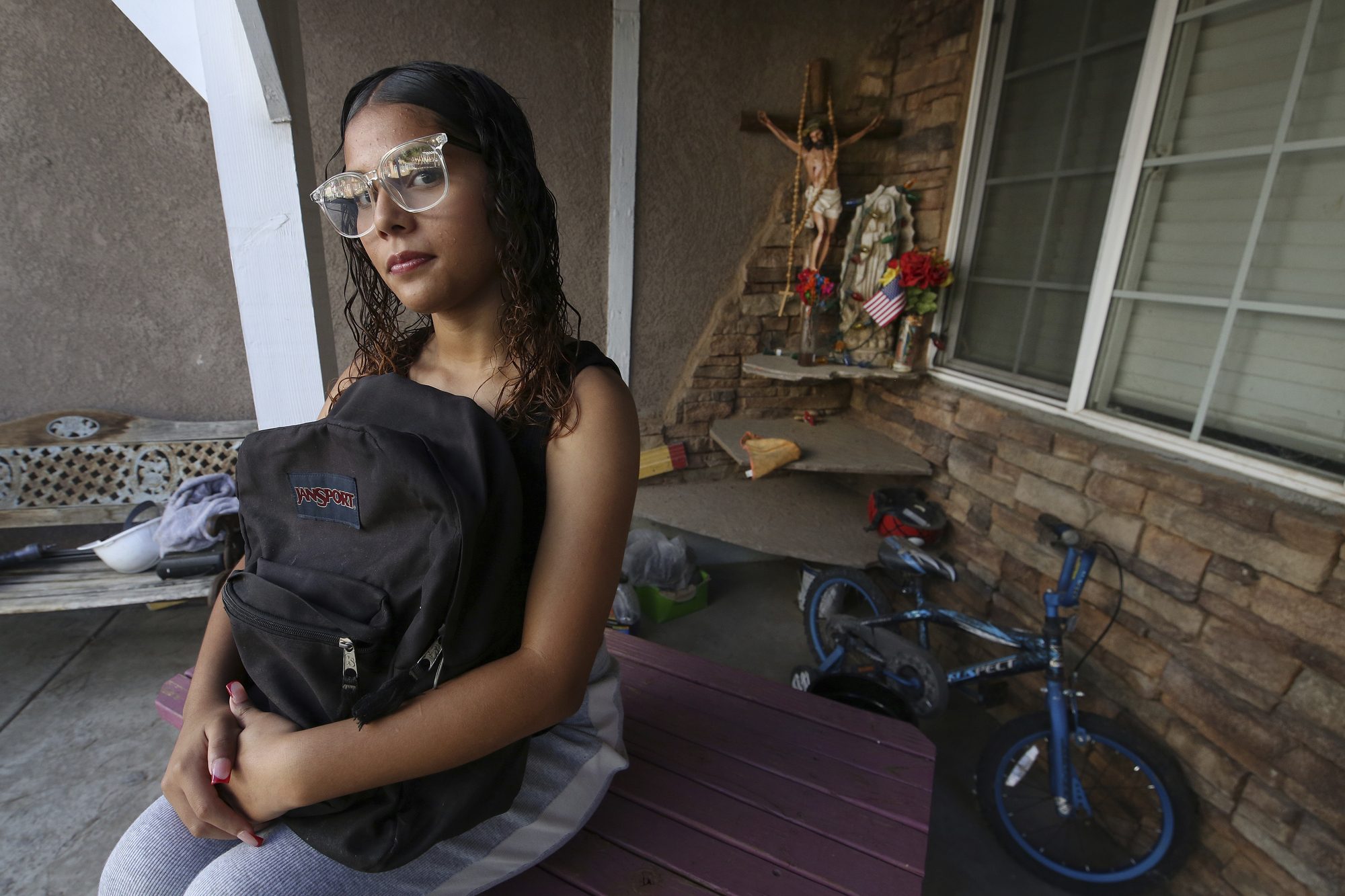
Melinda Gonzalez, 14, of Fresno has benefited from a program that provides a ride to school if she misses the school bus. (Gary Kazanjian / Associated Press)
“I don’t have a car; my parents couldn’t drive me to school,” Melinda said. “Getting that ride made a big difference.”
Gecker is an Associated Press reporter. Bianca Vázquez Toness, Sharon Lurye and Becky Bohrer of the Associated Press and Times staff writer Kate Sequeira contributed to this story. The Associated Press’ education coverage receives financial support from multiple private foundations. Find AP’s standards for working with philanthropies, a list of supporters and funded coverage areas at AP.org.
Los Angeles Times (archive.ph)
By Jocelyn Gecker, Veronica Roseborough, and Howard Blume
2024-08-15 14:44:15GMT
Yaretzi Perez, 14, has missed a lot of school, and her mother, Eleuteria, has to leave for work early. The solution for Yaretzi may be setting aside a seat for her on a school bus route. (Jason Armond / Los Angeles Times)
Ninth-grader Yaretzi Perez wants to be a neonatal nurse. But first, she has to find a way to stop missing so many days of school.
Her mother, Eleuteria Perez, is a single parent of five — ages 17, 14, 13, 10 and 8. They attend four schools, all starting at the same time. She’ll sometimes arrange a pick-up; sometimes pay someone to help. But the two older girls were supposed to walk to their middle and high schools from their Arlington Heights apartment.
Years after COVID-19 upended American schooling, nearly every state is still struggling with attendance, according to data collected by the Associated Press and Stanford University economist Thomas Dee, whose research tabulated about 12 million chronically absent students in 42 states and Washington, D.C., for the 2022-23 school year, the most recent for which there is comprehensive data.
In California about 1 in 4 students, or more than 1.45 million, were chronically absent in 2022-23, meaning they missed at least 10% of the school year — a rate comparable to the national average.
The figures for the Los Angeles Unified School District are worse, with about 1 in 3 students chronically absent. It’s common for school systems serving higher numbers of low-income families to also have worse attendance, both before the pandemic and today. In L.A. Unified, 81% of students qualify for a free or reduced-price lunch, the common marker for poverty in education.
The chronic absenteeism rate, while remaining high, represents an improvement over the prior year’s rate of 28.2%. Some states, including California, improved significantly; four got worse. Before the pandemic, 15% of students missed at least 10% of school, considered too high at the time.
Although society may have largely moved on from COVID, educators say they are still grappling with the effects of pandemic school closures. After months to a year or more at home, school for many students has felt overwhelming, boring or socially stressful. More than ever, children and parents have been deciding it’s OK to stay home, which makes catching up even harder.
Schools are working to identify students with slipping attendance, then providing help and hoping to close communication gaps with parents, who often aren’t aware their child is missing so much school or why it’s problematic.
To make more progress, experts say, schools must get creative.
The best solution for Yaretzi, school district staff decided, would be to connect the family with an L.A. Unified bus route the girl could take to get to school.
Yaretzi Perez, 14, with mother Eleuteria Perez. (Jason Armond / Los Angeles Times)
This decision was made as part of an L.A. Unified outreach program called iAttend, in which district staff reach out to families or even visit them to find out why children are missing school and then tailor solutions.
“You have to meet students and families where they are, and for us, it’s going to their homes,” said Supt. Alberto Carvalho, who periodically makes home visits with a phalanx of news media. In this case, the publicity — it was hoped — also would make an impression on other families.
L.A. Unified Supt. Alberto Carvalho along with senior school district officials and teachers visit Yaretzi Perez, 14, and mother Eleuteria, left, to support the family and curb her poor school attendance. (Jason Armond / Los Angeles Times)
After talking with daughter and mother, Carvalho turned things over to the students’ soon-to-be teachers at L.A. High in Mid-Wilshire, which is about a mile from the family’s home. The teachers offered a backpack of school supplies and also reassuring smiles.
Yaretzi, shy and overwhelmed for a while, eventually mentioned her interest in AVID, a college-prep and support program for students with challenges to overcome. She had been involved in AVID at Cochran Middle School.
AVID and algebra I teacher Sandra Ruiz encouraged this interest and described an important benefit, that Yaretzi would be with the same classmates all four years.
“All of the AVID classes, freshman, sophomore, junior, senior, are fourth period,” Ruiz said. “So make friends and then you can be on the bus with them.”
In L.A. Unified, just over 45% of students were chronically absent in 2021-22. The percentage dropped to 36.5% the following year, in 2022-23, the comparision year for the national research. The preliminary rate for the 2023-24 school shows improvement: to 32.3%.
Caring adults — and incentives
Across district and charter schools in Oakland, chronic absenteeism skyrocketed from 29% pre-pandemic to 53% in 2022-23. The district asked students what would convince them to come to class. Money, the students replied, and a mentor.
A grant-funded program launched in spring 2023 paid 45 students $50 weekly for perfect attendance. Students also checked in daily with an assigned adult and completed weekly mental health assessments.
Paying students isn’t sustainable, said Zaia Vera, the school district’s head of social-emotional learning. But many absent students lacked stable housing or were helping to support their families.
“The money is the hook that got them in the door,” Vera said.
More than 60% improved their attendance after taking part, Vera said. The program is expected to continue, along with districtwide efforts aimed at creating a sense of belonging. Oakland’s African American Male Achievement project, for example, pairs Black students with Black teachers who offer support.
Students who identify with their educators are more likely to attend school, said Michael Gottfried, a University of Pennsylvania professor. According to one study led by Gottfried, California students felt “it’s important for me to see someone who’s like me early on, first thing in the day,” he said.
A caring teacher made a difference for Golden Tachiquin, 18, who graduated from Oakland’s Skyline High School this spring. When she started 10th grade after a remote freshman year, she felt lost and anxious. She realized only later these feelings caused the nausea and dizziness that kept her home sick. She was absent at least 25 days that year.
But she bonded with an Afro-Latina teacher who understood her culturally and made the straight A student, feel her poor attendance didn’t define her.
“I didn’t dread going to her class,” Tachiquin said.
Similar scenarios are playing out across the country.
Flerentin “Flex” Jean-Baptiste missed so much school he had to repeat his freshman year at Medford High outside Boston. At school, “you do the same thing every day,” said Flex, who was absent 30 days his first year. “That gets very frustrating.”
Then Principal Marta Cabral let students play organized sports during lunch, somewhat like a recess — if they attended their classes. High schoolers need freedom and an opportunity to move their bodies, she said. “They’re here for seven hours a day. They should have a little fun.”
Flex, 16, said the sports for all “gave me something to look forward to.”
Fleretin “Flex” Jean-Baptiste, 16, of Medford, Mass., has improved his school attendance since the gym became available during the school day. (Josh Reynolds / Associated Press)
The following year, he cut his absences in half. Schoolwide, the share of students who were chronically absent declined from 35% in March 2023 to 23% in March 2024.
The high school also requires administrators to greet and talk with students each morning, especially those with a history of missing school.
Stubborn circumstances
Chronically absent students are at higher risk of illiteracy and eventually dropping out. They also miss the meals, counseling and socialization provided at school.
Many of the reasons students missed school early in the pandemic are still firmly in place: financial hardship, transportation problems, mild illness and mental health struggles.
Emotional and behavioral problems also have kept kids home from school. University of Southern California research found a correlation between absenteeism and poor mental health.
For example, in the USC study, almost a quarter of chronically absent students had high levels of emotional or behavioral problems, according to results from a parent questionnaire, compared with just 7% of students with good attendance. Emotional symptoms among teen girls were especially linked with missing lots of school.
“These different things that we’re all concerned about are all interconnected,” said Morgan Polikoff, a USC education professor and one of the lead researchers.
How sick is too sick?
When chronic absence surged to around 50% in Fresno, officials realized they had to remedy pandemic-era mindsets about keeping kids home.
“Unless your student has a fever or threw up in the last 24 hours, you are coming to school. That’s what we want,” said Abigail Arii, director of student support services.
Often, said Noreida Perez, who oversees attendance, parents aren’t aware physical symptoms can point to mental health struggles — such as when a child doesn’t feel up to leaving their bedroom.
L.A. schools Supt. Carvalho turned some heads when he reversed COVID-era policies stressing the importance of keeping sick children at home.
“In certain parts of our community, where the mortality rate associated with COVID was higher, there were higher levels of fear,” Carvalho said. “Parents kept their kids home for any little runny nose.”
And many parents, Carvalho added, “exercise greater leeway regarding attendance, where the parents were almost giving up the argument with the child, particularly if they were teenagers...That is no longer acceptable. There’s no replacement for the nurturing environment in school.”
Changing the culture around sick days is only part of the problem.
At Fresno’s Fort Miller Middle School, where half the students were chronically absent, two reasons kept coming up: dirty laundry and no transportation. The school bought a washer and dryer for families’ use, along with a Chevy Suburban to pick up students who missed the school bus. Overall, Fresno’s chronic absenteeism improved to 35% in 2022-23.
Melinda Gonzalez, 14, missed the school bus about once a week and would call for rides in the Suburban.
Melinda Gonzalez, 14, of Fresno has benefited from a program that provides a ride to school if she misses the school bus. (Gary Kazanjian / Associated Press)
“I don’t have a car; my parents couldn’t drive me to school,” Melinda said. “Getting that ride made a big difference.”
Gecker is an Associated Press reporter. Bianca Vázquez Toness, Sharon Lurye and Becky Bohrer of the Associated Press and Times staff writer Kate Sequeira contributed to this story. The Associated Press’ education coverage receives financial support from multiple private foundations. Find AP’s standards for working with philanthropies, a list of supporters and funded coverage areas at AP.org.


