
- Joined
- Feb 4, 2023
When news came out that President Donald Trump is resettling Afrikaners into the United States of America, I observed massive interest on the Internet ticked upwards at the phenomenon of white separatist communities in South Africa.
Most of these separatist communities in South Africa like Kleinfontein are small, but the most prominent, largest, and fastest growing of these communities is Orania. I initially thought Orania was full of crazy white people that were delusional enough to build a community in a country that despises them and with a growing political party that wants them annihilated. However, I watched a couple of videos from white and black vloggers in Orania and I quickly warmed up to the Afrikaner-only community that I wish them to succeed against all odds because of how hardworking yet kind the people are.
With Elon Musk allowing /pol/, white nationalist, and far-right users onto X, many of its users were finally able to congregate on a mainstream platform and quickly grow their Internet communities. When news broke out about Orania and how successful it became, these users became attracted to the idea of a whites-only community like Orania (even though it is more accurate to call Orania Afrikaner-separatist) and thus decided to form their own enclaves, of which Return To The Land (RTTL) was the most prominent when Sky News aired their news video on them. These community types tend to attract the most loony types and are heavily influenced by the Groyper movement led by the gay catboy himself Nick Fuentes and you would think these type of communities are infested with federal informants.
The purpose of the thread is to discuss whether the communities that I presume the Farms want it to succeed like Orania and the more lolcow-adjacent Community Watch-esque like RTTL if they would succeed to become whitepills, become failures that nobody cares about, or get stomped on by the national government in a Waco/Ruby Ridge scenario. The purpose of the thread is mostly to centralize discussion following the two articles on RTTL (expansion to Missouri, porn video scandal) as well as some brief mentions of Orania around the Farms.
Below are further sections dedicated to what type of communities Orania and RTTL are so you get an idea what they are.
Adapted from an dilapidated town in the middle of a semi-arid undeveloped desert, Afrikaners used the nearby Orange River to create rich farmland through an irrigation system that includes them financing and building up their own water pump and pipelines. Farms soon developed around Orania and the town became a net exporter of pecan nuts and macadamia nuts. Businesses flourished around in the town includes construction, hospitality, schooling, candy-making, manufacturing, banking, and architecture.
Utility-wise, Orania's landfill is the only one compliant with national government standards in the province of the Northern Cape. Orania has also built its own sewage system that can support up to 10,000 inhabitants. Prioritizing self-sustainability and energy independence, Orania has built their own solar power plant as well installed solar panels on top of houses to power the city. Enough power was soon created that Orania now exports power to nearby towns for more income. The choice of solar power was due to the town being in an arid desert. Compared to the rest of the country, Orania has barely any crime and thus embraced a high-trust society where it is said you can leave your car door open and nobody will steal it. Afrikaners who are citizens of the town that do commit a crime are permanently exiled.
Orania's two schools are all privately-funded and take no cent from the national government, which means that they do not correspond to education decisions made by the government. Orania has its own vocational college, Bo-Karoo Opleiding, where Afrikaner students from Orania and all around South Africa learn technical trades such as welding, metalworking, and engineering. Afrikaner college students would then apply that knowledge in constructing residential and commercial buildings in Orania and later places around the country and the world.
Orania is owned and administered by a private shareholders' association company named Vluytjeskraal Aandeleblok (VAB, 'Vluytjiekraal Share Block'), where all residents must become shareholders to live there. The community controls can buy property or settle in the town, aligning with its goal of cultural self-determination for Afrikaners. Orania functions within South African law by operating as a private town on private land, rather than as a municipality.
The philosophy of Orania is based on the concept of "self-reliance" and the "do-it-yourself" mentality. Afrikaners, both men and women, must do all the manual work themselves and cannot hire or exploit cheap labor, especially those of a different ethnic group, to do the work. This is represented in Orania's flag, showing a white boy named Klein Reus ('small giant') rolling up his sleeves to start working. As a result, Orania Afrikaners have low wages than the average Afrikaner, but at the same time, there is little to no unemployment in the town (2%) with unskilled workers being scarce. Ultimately, Orania creates social cohesion between classes: the wealthy and the less affluent living next to each other and the wealthy doing more manual work while the poorer doing more professional work.
Such philosophy is influenced by the community's devout religious faith: Protestant Christianity primarily of the Reformed/Calvinist denomination. Churches can be seen everywhere, and references to Christianity and the Bible has been constantly referenced by the town's government. Modest living and big strong families are promoted and the wealthy dedicate themselves to fund and build community projects themselves to support the Afrikaner cause. Humility and kindness are central to Orania's Christian values, and outsiders, both white and black, have reported of extremely high hospitality and friendliness from the Orania locals if they visit the town. In Orania, an individual's wealth is not measured in money or property. Instead, it is how much that individual does for that community.
Meanwhile, Orania's extreme success has inspired many black African tribal leaders from the Xhosa ethnic group and Tswana ethnic group to visit and borrow ideas to support their own towns based on their ideas of self-sufficiency and self-sustainability. In addition, Orania's leadership has been working with them to achieve this ideal. Many Presidents of post-apartheid South Africa have visited the town: Nelson Mandela (1st; visited 1995), Thabo Mbeki (2nd; 2018 ), and Jacob Zuma (4th, visited 2010).
The town found itself more relevant recently with the already unstable multi-racial system of South Africa, with harassment and murders targeted at the Afrikaner minority, threats of genocide by the black nationalist Economic Freedom Fighters (EFF) political party, and having Afrikaner-owned farmland taken away by the national government ruled by the ruling African National Congress party (ANC). Memorial icons to prominent Afrikaners have been neglected, vandalized, and dumped by the city governments while Afrikaner holidays are discarded. Afrikaners have been fleeing South Africa to Russia and later the United States of America under the Second Trump Administration, of which the latter brought the issue to ANC leader and President of South Africa Cyril Ramaphosa in a tense White House meeting.
The leader of Orania, Joost Strydom, has stated that he feared that Afrikaners leaving South Africa would ultimately lose their identity, language, and culture. He urged nations supporting the Afrikaner cause to invest in Afrikaner-only communities in South Africa rather than resettling Afrikaners to their countries.
Black YouTubers
White YouTubers
The values of Orania Afrikaners soon have an impact in places that you would expect to have a more negative bias:
RTTL describes itself as a "private membership association (PMA) for individuals and families with traditional views and European ancestry (...that...) hold events and conferences (...and...) help groups of our members form European heritage communities." (Archive) The symbol of RTTL is a rune based on the Tree of Life, possibly Yggdrasil of Norse mythology.
The PMA was founded in mid-2023 by an association of white nationalists who elected Eric Orvoll (known in his socials as @_Aarvoll) as its president. The community then took into action and bought property near Ravenden from a logging company consisting of 150 acres. The community had several white nationalists who specialized in construction, which gives them a boost to help speed up construction of homesteads and community buildings. One of the white nationalists in the construction business, Peter Czere, is a former hippie who built a veganism-based community in the middle of Ecuador. Czere reportedly left the community to flee the country from charges of stealing funds. Czere also help craft the legal framework for RTTL in preparation for lawsuits.
As a PMA, RTTL has an application and vetting process on who to accept into their community. The basis application is that the applicant must:
On that last point, Orvoll states that the RTTL community is a mix of Christian and pagan but intends that future RTTL communities where one would be entirely Christian and the other entirely pagan. There was a meeting between Orvoll and Joost Strydom, the leader of Orania, where Orvoll intends to bring the ideas of Orania into RTTL, but I can sense Orvoll's mentioning of paganism unnerved Joost since Orania is a Reformed/Calvinist Protestant community. At the end of the video, Joost tells Orvoll that a central pagan tradition is converting to Christianity and Orvoll just nods.
There was a recent news article on The Daily Mail where Orvoll posted porn videos with his first wife Caitlin Smith around a decade ago, who mothered four kids with him and since divorced in October 2024. Caitlin is nevertheless is a member of RTTL married to a different man. In a response video, Orvoll stated that the porn videos were made during a time where he did a ton of drugs and had a nihilistic lifestyle based on hedonistic sex. However, he said he turned from his sinful ways after returning to Christianity. In a xeet however, he mentioned he experimented with polygyny/polygamy even since becoming Christian but after being part of a RTTL and realized that having polygamous beliefs is a hindrance, he denounced it. Defenders of Orvoll would also that the author behind the news article is a Jewish woman and thus is automatically biased.
Orvoll has been recently touring around on numerous podcasts to increase exposure to RTTL, gaining many followers and many applicants to RTTL as a result. There were some good choices such as Orvoll going on the Hodge Twins' podcast TwinsPod, of which the Hodge Twins are black.
However, Orvoll affiliates with individuals that are glowie-related and connected to federal investigation agencies, primarily the Groyper movement led by glowie-affiliated gay catboy Nick Fuentes. Orvoll went to Fuentes' America First Political Action Conference in 2024 and also went on to star in an episode in Fuentes' podcast. Orvoll went into a podcast featuring Patriot Front's founder Thomas Rousseau on Jake Shields' Fight Back Podcast, which is groyper-adjacent due to the many episodes Nick Fuentes is featured in. The Patriot Front is a Neo-Nazi movement, but they are heavily suspected to be federal informants due to how randomly they organize their movements to then quickly disappear.
According to RTTL's Substack article, the U.S. Supreme Court says that a private membership association (PMA) that meets the Court’s criteria is exempt from certain provisions of the Civil Rights Act of 1964. Since RTTL is a bona fide private club, it is exempt from Title II of the Civil Rights Act. In addition, as a PMA, RTTL is exempted from anti-discrimination laws such as the Fair Housing Act. As a result of abiding by the Act, RTTL does not engage in the sale or rental of real estate.
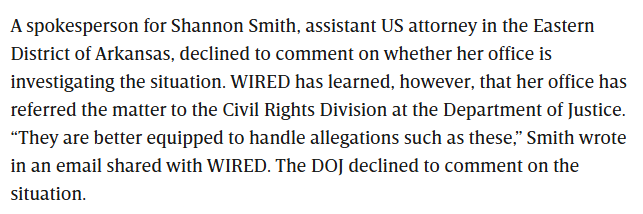
This legality was then challenged. Arkansas’ Republican Attorney General Tim Griffin has launched an investigation into RTTL, condemning the project for “racial discrimination” and alleged that it raises “all sorts of legal issues, including constitutional concerns.” Griffin later closed the investigation, with his office stating RTTL did not break any laws-for now. Orvoll has announced that RTTL is under investigation again, this time under the Department of Justice, which he states will determine if a white separatist community is allowed in the United States or not.
Most of these separatist communities in South Africa like Kleinfontein are small, but the most prominent, largest, and fastest growing of these communities is Orania. I initially thought Orania was full of crazy white people that were delusional enough to build a community in a country that despises them and with a growing political party that wants them annihilated. However, I watched a couple of videos from white and black vloggers in Orania and I quickly warmed up to the Afrikaner-only community that I wish them to succeed against all odds because of how hardworking yet kind the people are.
With Elon Musk allowing /pol/, white nationalist, and far-right users onto X, many of its users were finally able to congregate on a mainstream platform and quickly grow their Internet communities. When news broke out about Orania and how successful it became, these users became attracted to the idea of a whites-only community like Orania (even though it is more accurate to call Orania Afrikaner-separatist) and thus decided to form their own enclaves, of which Return To The Land (RTTL) was the most prominent when Sky News aired their news video on them. These community types tend to attract the most loony types and are heavily influenced by the Groyper movement led by the gay catboy himself Nick Fuentes and you would think these type of communities are infested with federal informants.
The purpose of the thread is to discuss whether the communities that I presume the Farms want it to succeed like Orania and the more lolcow-adjacent Community Watch-esque like RTTL if they would succeed to become whitepills, become failures that nobody cares about, or get stomped on by the national government in a Waco/Ruby Ridge scenario. The purpose of the thread is mostly to centralize discussion following the two articles on RTTL (expansion to Missouri, porn video scandal) as well as some brief mentions of Orania around the Farms.
Below are further sections dedicated to what type of communities Orania and RTTL are so you get an idea what they are.
Orania
Northern Cape, South Africa - A new Afrikaner homeland
Panorama of the town | Orania's flag: Klein Reus ('small giant') with the colors of the Prince's flag, one of the historical flags of the Netherlands |
2024 Yearly Street Festival |
Summary
Orania is a Afrikaner separatist town located along the Orange River (origin of its name) in South Africa established in 1991. With a population that is approaching 3,000, Orania aims to become a Afrikaner ethnostate republic within South Africa that will be a haven for Afrikaners. Only white Afrikaners can apply to live here, meaning Orania will reject you if you're a white person that is not of the Afrikaner ethnicity (ex. White British) or is a non-white, so sorry white folks who want to move somewhere 'trad' and 'based.' Thus, it can be inaccurate to call this a "white separatist" town, because all the people that can apply to live here must be pure Afrikaner in terms of language, culture (which includes celebration of Afrikaner holidays), and ethnicity (Afrikaners, who are white).Adapted from an dilapidated town in the middle of a semi-arid undeveloped desert, Afrikaners used the nearby Orange River to create rich farmland through an irrigation system that includes them financing and building up their own water pump and pipelines. Farms soon developed around Orania and the town became a net exporter of pecan nuts and macadamia nuts. Businesses flourished around in the town includes construction, hospitality, schooling, candy-making, manufacturing, banking, and architecture.
Background
Afrikaners are a European ethnic group that is a combination of many different northern and central European groups, primarily the Dutch, that settled in South Africa in the 1600s. Their language, Afrikaans, is based on Dutch but borrows many words from other European languages like German; it is referred as the "second-most sexiest language in the world," behind the New Zealand accent of the English language.
Although Afrikaners were the first inhabitants of the Cape region in South Africa, they were pushed inland due to persecution by their authorities of the Dutch East Indies Company and later the British Empire, of which the latter instituted brutal policies against Afrikaners such as mass starvation and concentration camps. These Afrikaner settlers would establish small republics to protect themselves from the British as well as Black African Bantu tribes like the Zulu. After winning many battles against the British and Bantu tribes, the Afrikaners were ultimately conquered and their republics were annexed into the British Empire.
With the South Africa colonies needing cheap labor, black Bantus would ultimately fill the role, and their population rate soon outpaced the whites: Afrikaners and British. When the Afrikaners regained control over the colonies in 1910 but still remained a part of the Empire (later Commonwealth), they borrowed a racial policy from the British known as apartheid (Afrikaans: 'aparthood;' 'separateness') that is meant to segregate the whites and blacks in order to keep South Africa primarily white-dominated. This policy continued when South Africa left the Commonwealth to become a republic in 1961.
However, apartheid was already made redundant even before its dismantlement in 1991 due to the Afrikaner elite wanting to keep exploiting cheap black labor in a apartheid policy known as baasskap ('bosshood'), with black residents growing more destitute yet more numerous in the country and thus exacerbated the inevitability of South Africa being majority-ruled by the blacks in replacement of Afrikaners. Disillusioned by the immorality of white minority rule, several Afrikaners sought to create a state within South Africa that is to become a new Afrikaner ethnostate called Volkstaat ('People's State').

Orania in the early 1970s
Inspired after the nation of Israel,Volkstaat would be located in an underdeveloped area of South Africa in a desert that can be considered as the middle of nowhere in the Northern Cape region, hoping to be seen by the South African government as politically irrelevant. Economically underdeveloped, Volkstaat would demand its Afrikaner inhabitants that they must do all the manual labor and could not rely on exploiting black people to do it cheaply. The man behind Volkstaat acknowledged that majority of Afrikaaners would not be interested in moving there, but hoped that it becomes an option for them to settle in case the situation for the Afrikaners worsens.
In December 1990, about 40 Afrikaner families headed by Carel Boshoff bought the ghetto of Orania from the Department of Water Affairs. The town was built in the 1960s to host workers in building a dam. Coloured people soon moved into the town once the workers moved out, but the South African government evicted them after the purchase in one of the last forced removal actions of apartheid (later compensated in post-apartheid era). The concept of Orania was mocked relentlessly by many Afrikaners, including right-wingers, and the President of South Africa at that time F. W. de Klerk.
The Orania residents repaired the houses, but there was no economic activity as there were few jobs available and no money for further development. Initially relying on neighboring farms for food, Orania residents soon constructed farms and irrigation systems around the town to quickly build an economy to self-sustain themselves by 1996. It was a success, and Orania grew to 200 permanent inhabitants. Investments were put into Orania following President Nelson's Mandela visit to the town for tea with the widow of former Prime Minister Hendrik Verwoerd, helping the Afrikaner residents upgrade water and electricity supply and roads and build up businesses.
As Orania grows to become a success, the concept of Volkstaat was shelved temporarily as Orania's rate of growth is not as high as the founders of the idea had hoped. However, they will revitalize the concept once once the population grows to the proper amount through more Afrikaners moving in or more births.
Although Afrikaners were the first inhabitants of the Cape region in South Africa, they were pushed inland due to persecution by their authorities of the Dutch East Indies Company and later the British Empire, of which the latter instituted brutal policies against Afrikaners such as mass starvation and concentration camps. These Afrikaner settlers would establish small republics to protect themselves from the British as well as Black African Bantu tribes like the Zulu. After winning many battles against the British and Bantu tribes, the Afrikaners were ultimately conquered and their republics were annexed into the British Empire.
With the South Africa colonies needing cheap labor, black Bantus would ultimately fill the role, and their population rate soon outpaced the whites: Afrikaners and British. When the Afrikaners regained control over the colonies in 1910 but still remained a part of the Empire (later Commonwealth), they borrowed a racial policy from the British known as apartheid (Afrikaans: 'aparthood;' 'separateness') that is meant to segregate the whites and blacks in order to keep South Africa primarily white-dominated. This policy continued when South Africa left the Commonwealth to become a republic in 1961.
However, apartheid was already made redundant even before its dismantlement in 1991 due to the Afrikaner elite wanting to keep exploiting cheap black labor in a apartheid policy known as baasskap ('bosshood'), with black residents growing more destitute yet more numerous in the country and thus exacerbated the inevitability of South Africa being majority-ruled by the blacks in replacement of Afrikaners. Disillusioned by the immorality of white minority rule, several Afrikaners sought to create a state within South Africa that is to become a new Afrikaner ethnostate called Volkstaat ('People's State').

Orania in the early 1970s
Inspired after the nation of Israel,Volkstaat would be located in an underdeveloped area of South Africa in a desert that can be considered as the middle of nowhere in the Northern Cape region, hoping to be seen by the South African government as politically irrelevant. Economically underdeveloped, Volkstaat would demand its Afrikaner inhabitants that they must do all the manual labor and could not rely on exploiting black people to do it cheaply. The man behind Volkstaat acknowledged that majority of Afrikaaners would not be interested in moving there, but hoped that it becomes an option for them to settle in case the situation for the Afrikaners worsens.
In December 1990, about 40 Afrikaner families headed by Carel Boshoff bought the ghetto of Orania from the Department of Water Affairs. The town was built in the 1960s to host workers in building a dam. Coloured people soon moved into the town once the workers moved out, but the South African government evicted them after the purchase in one of the last forced removal actions of apartheid (later compensated in post-apartheid era). The concept of Orania was mocked relentlessly by many Afrikaners, including right-wingers, and the President of South Africa at that time F. W. de Klerk.
The Orania residents repaired the houses, but there was no economic activity as there were few jobs available and no money for further development. Initially relying on neighboring farms for food, Orania residents soon constructed farms and irrigation systems around the town to quickly build an economy to self-sustain themselves by 1996. It was a success, and Orania grew to 200 permanent inhabitants. Investments were put into Orania following President Nelson's Mandela visit to the town for tea with the widow of former Prime Minister Hendrik Verwoerd, helping the Afrikaner residents upgrade water and electricity supply and roads and build up businesses.
As Orania grows to become a success, the concept of Volkstaat was shelved temporarily as Orania's rate of growth is not as high as the founders of the idea had hoped. However, they will revitalize the concept once once the population grows to the proper amount through more Afrikaners moving in or more births.
Utilities and Facilities
Electric public transport in Orania, powered by solar and the fares are free | Construction in Orania | Residents of Orania paving the roads |
Utility-wise, Orania's landfill is the only one compliant with national government standards in the province of the Northern Cape. Orania has also built its own sewage system that can support up to 10,000 inhabitants. Prioritizing self-sustainability and energy independence, Orania has built their own solar power plant as well installed solar panels on top of houses to power the city. Enough power was soon created that Orania now exports power to nearby towns for more income. The choice of solar power was due to the town being in an arid desert. Compared to the rest of the country, Orania has barely any crime and thus embraced a high-trust society where it is said you can leave your car door open and nobody will steal it. Afrikaners who are citizens of the town that do commit a crime are permanently exiled.
Orania's two schools are all privately-funded and take no cent from the national government, which means that they do not correspond to education decisions made by the government. Orania has its own vocational college, Bo-Karoo Opleiding, where Afrikaner students from Orania and all around South Africa learn technical trades such as welding, metalworking, and engineering. Afrikaner college students would then apply that knowledge in constructing residential and commercial buildings in Orania and later places around the country and the world.
Orania is owned and administered by a private shareholders' association company named Vluytjeskraal Aandeleblok (VAB, 'Vluytjiekraal Share Block'), where all residents must become shareholders to live there. The community controls can buy property or settle in the town, aligning with its goal of cultural self-determination for Afrikaners. Orania functions within South African law by operating as a private town on private land, rather than as a municipality.
'Do-it-yourself' Philosophy
Afrikaner men and women doing all the farming work in Orania | Start of a new school year in the Christelike Volks-Onderwys (CVO) Skool Orania ('Christian People's Education') | Expansion of a solar farm in Orania |
The philosophy of Orania is based on the concept of "self-reliance" and the "do-it-yourself" mentality. Afrikaners, both men and women, must do all the manual work themselves and cannot hire or exploit cheap labor, especially those of a different ethnic group, to do the work. This is represented in Orania's flag, showing a white boy named Klein Reus ('small giant') rolling up his sleeves to start working. As a result, Orania Afrikaners have low wages than the average Afrikaner, but at the same time, there is little to no unemployment in the town (2%) with unskilled workers being scarce. Ultimately, Orania creates social cohesion between classes: the wealthy and the less affluent living next to each other and the wealthy doing more manual work while the poorer doing more professional work.
Such philosophy is influenced by the community's devout religious faith: Protestant Christianity primarily of the Reformed/Calvinist denomination. Churches can be seen everywhere, and references to Christianity and the Bible has been constantly referenced by the town's government. Modest living and big strong families are promoted and the wealthy dedicate themselves to fund and build community projects themselves to support the Afrikaner cause. Humility and kindness are central to Orania's Christian values, and outsiders, both white and black, have reported of extremely high hospitality and friendliness from the Orania locals if they visit the town. In Orania, an individual's wealth is not measured in money or property. Instead, it is how much that individual does for that community.
Meanwhile, Orania's extreme success has inspired many black African tribal leaders from the Xhosa ethnic group and Tswana ethnic group to visit and borrow ideas to support their own towns based on their ideas of self-sufficiency and self-sustainability. In addition, Orania's leadership has been working with them to achieve this ideal. Many Presidents of post-apartheid South Africa have visited the town: Nelson Mandela (1st; visited 1995), Thabo Mbeki (2nd; 2018 ), and Jacob Zuma (4th, visited 2010).
Orania and anti-Afrikaner violence
United States President Donald Trump confronts South Africa President Cyril Ramaphosa on killings of Afrikaner farmers and the 'Kill the Boer' chants of the Economic Freedom Fighters (EFF) political party during tense meeting | Chairman of Orania Joost Strydom pleads President Donald Trump of the United States to not resettle Afrikaners but instead assist Afrikaners into establishing Afrikaner-only communities in South Africa |
The town found itself more relevant recently with the already unstable multi-racial system of South Africa, with harassment and murders targeted at the Afrikaner minority, threats of genocide by the black nationalist Economic Freedom Fighters (EFF) political party, and having Afrikaner-owned farmland taken away by the national government ruled by the ruling African National Congress party (ANC). Memorial icons to prominent Afrikaners have been neglected, vandalized, and dumped by the city governments while Afrikaner holidays are discarded. Afrikaners have been fleeing South Africa to Russia and later the United States of America under the Second Trump Administration, of which the latter brought the issue to ANC leader and President of South Africa Cyril Ramaphosa in a tense White House meeting.
The leader of Orania, Joost Strydom, has stated that he feared that Afrikaners leaving South Africa would ultimately lose their identity, language, and culture. He urged nations supporting the Afrikaner cause to invest in Afrikaner-only communities in South Africa rather than resettling Afrikaners to their countries.
Media
Here is Orania in the eyes of some YouTubers, both white and black, which shows a much more accurate version of Orania than the images I give. Many of them has stated they have very positive experiences in Orania. Ignore some of the unflattering thumbnails.Black YouTubers
White YouTubers
The values of Orania Afrikaners soon have an impact in places that you would expect to have a more negative bias:
- CNN even wrote a neutral article on Orania in response to Trump resettling several Afrikaners. (Archive)
- Redditors are mixed on Orania: while you have the negative nancies like on r/LateStageCapitalism (Archive), you have some very positive folks on r/DownSouth (Archive).
- The Wikipedia article on Orania is also pretty neutral. (Archive)
Future
Currently, Orania hopes to keep expanding to become a small rural city of 10,000, where the resident Afrikaners are building their own city center as well as several district centers in their city. In the distant future, they hope that Orania will be large enough to support a ethnostate and fulfill the concept of Volkstaat, that is, an Afrikaner ethnostate within South Africa, as well as turning South Africa from a unitary country to a confederation of small ethnic republics and ethnic kingdoms.Art of one of the new public squares in Orania | 3D rendition of the city center of Orania that is currently under construction | 3D rendition of a public square for students in Orania |
Return to the Land
Ravenden, Arkansas, United States of America - /pol/ makes an OraniaSummary
Orania has inspired many ethnic groups to start planning out their own settlements based on the values of self-sustainability and self-sufficiency. However, the fact that Orania is entirely white with conservative aspects like emphasis on religion, culture, and big families has attracted the more loony types of the far-right spectrum. Welcome to Return to the Land (RTTL), a white separatist community in the Ozarks in northeast Arkansas. No Blacks, Hispanics, mixed-race, gays, Asians, and Jews. You may have seen this video from Sky News in covering the town.Sky News - Inside 'Return to the Land': The group making a whites-only community in Arkansas (Archive) | Eric Orvoll - What is "Return to the Land"? (Archive) |
RTTL describes itself as a "private membership association (PMA) for individuals and families with traditional views and European ancestry (...that...) hold events and conferences (...and...) help groups of our members form European heritage communities." (Archive) The symbol of RTTL is a rune based on the Tree of Life, possibly Yggdrasil of Norse mythology.
The PMA was founded in mid-2023 by an association of white nationalists who elected Eric Orvoll (known in his socials as @_Aarvoll) as its president. The community then took into action and bought property near Ravenden from a logging company consisting of 150 acres. The community had several white nationalists who specialized in construction, which gives them a boost to help speed up construction of homesteads and community buildings. One of the white nationalists in the construction business, Peter Czere, is a former hippie who built a veganism-based community in the middle of Ecuador. Czere reportedly left the community to flee the country from charges of stealing funds. Czere also help craft the legal framework for RTTL in preparation for lawsuits.
As a PMA, RTTL has an application and vetting process on who to accept into their community. The basis application is that the applicant must:
- be of majority European ancestry, whether the applicant is an American mutt or from Sweden, and applicants that are less than 25% white would be reviewed heavily on a case-by-case basis.
- cannot support LGBT values
- cannot be atheists and must belong to a Western religion, that is, either Christianity or paganism.
On that last point, Orvoll states that the RTTL community is a mix of Christian and pagan but intends that future RTTL communities where one would be entirely Christian and the other entirely pagan. There was a meeting between Orvoll and Joost Strydom, the leader of Orania, where Orvoll intends to bring the ideas of Orania into RTTL, but I can sense Orvoll's mentioning of paganism unnerved Joost since Orania is a Reformed/Calvinist Protestant community. At the end of the video, Joost tells Orvoll that a central pagan tradition is converting to Christianity and Orvoll just nods.
Orania Beweging / Orania Movement - Die Orania in die VSA? / The Orania in the USA? (Paganism mentioned in 4:00 and 13:33) - (Archive) |
Community Watch
The community's president Eric Orvoll is an interesting individual: ideas, intelligence, and background that warrants a lolcow but mental stability that does not warrant it. Orvoll describes himself as a "Christian Platonist" and fully embraces in the study of philosophy, history, metaphysics, and /pol/ meme esoteric ideologies that white people descended from Hyperborea (Archive) and the existence of Atlantis (Archive). Eric describes himself as a Christian but is a former Roman Catholic and is interested in Eastern Orthodoxy.There was a recent news article on The Daily Mail where Orvoll posted porn videos with his first wife Caitlin Smith around a decade ago, who mothered four kids with him and since divorced in October 2024. Caitlin is nevertheless is a member of RTTL married to a different man. In a response video, Orvoll stated that the porn videos were made during a time where he did a ton of drugs and had a nihilistic lifestyle based on hedonistic sex. However, he said he turned from his sinful ways after returning to Christianity. In a xeet however, he mentioned he experimented with polygyny/polygamy even since becoming Christian but after being part of a RTTL and realized that having polygamous beliefs is a hindrance, he denounced it. Defenders of Orvoll would also that the author behind the news article is a Jewish woman and thus is automatically biased.
The news article featuring Orvoll and his ex-wife Caitlin, of which the latter is also a member of RTTL | Orvoll's response video to said article |
Orvoll has been recently touring around on numerous podcasts to increase exposure to RTTL, gaining many followers and many applicants to RTTL as a result. There were some good choices such as Orvoll going on the Hodge Twins' podcast TwinsPod, of which the Hodge Twins are black.
However, Orvoll affiliates with individuals that are glowie-related and connected to federal investigation agencies, primarily the Groyper movement led by glowie-affiliated gay catboy Nick Fuentes. Orvoll went to Fuentes' America First Political Action Conference in 2024 and also went on to star in an episode in Fuentes' podcast. Orvoll went into a podcast featuring Patriot Front's founder Thomas Rousseau on Jake Shields' Fight Back Podcast, which is groyper-adjacent due to the many episodes Nick Fuentes is featured in. The Patriot Front is a Neo-Nazi movement, but they are heavily suspected to be federal informants due to how randomly they organize their movements to then quickly disappear.
Aarvoll - The Future of "the Movement" with Nick Fuentes | Return to the Land founder Eric Aarvoll and Patriot Front's Thomas Rousseau - Fight Back Exclusive (Archive) |
Somehow they have encountered progress
This movement is affiliated with lolcows (even the worst ones), has lolcow beliefs and backgrounds, and is already penetrated by federal informants. However, I have to give credit where credit is due. The lolcows have pretty much succeeded in building themselves a white separatist community. All photos are taken from RTTL's X account. Future projects are a education system that supports homeschooling as well as a school building and healthcare networks.Housing
Members of RTTL have all built their own houses, which are the size of small cabins. It is to note that these buildings are single-room for single people in the settlement, but most likely they will expand their housing in the future. Family dwellings are not only larger but also has a camper parked nearby for more room.Homesteading
Tomato patch | Goats | Turkeys |
Public Utilities and Facilities
Pavilion for social gatherings; expected to be completed before October | Installing water pipes and power lines |
Legality
You may be wondering, how does a community like RTTL not violate the Civil Rights Act?According to RTTL's Substack article, the U.S. Supreme Court says that a private membership association (PMA) that meets the Court’s criteria is exempt from certain provisions of the Civil Rights Act of 1964. Since RTTL is a bona fide private club, it is exempt from Title II of the Civil Rights Act. In addition, as a PMA, RTTL is exempted from anti-discrimination laws such as the Fair Housing Act. As a result of abiding by the Act, RTTL does not engage in the sale or rental of real estate.
This legality was then challenged. Arkansas’ Republican Attorney General Tim Griffin has launched an investigation into RTTL, condemning the project for “racial discrimination” and alleged that it raises “all sorts of legal issues, including constitutional concerns.” Griffin later closed the investigation, with his office stating RTTL did not break any laws-for now. Orvoll has announced that RTTL is under investigation again, this time under the Department of Justice, which he states will determine if a white separatist community is allowed in the United States or not.
Future
RTTL has stated that they are purchasing acres of lands in other states to create white separatist communities:- Another community in the Arkansas Ozarks, for two communities total in the state
- One community in the Missouri Ozarks
- One community in the Deep South Region
- Two communities in the Appalachian Region, most likely West Virginia
Last edited:


